

November 15, 2026 at 4:00 PM UTC
Duration: 50
The growing use of portable and wearable electronics has increased the need for flexible, safe, and sustainable energy-storage devices. This presentation highlights our work on advanced supercapacitor electrodes using biomass-derived nanocellulose, carbon nanomaterials, emerging two-dimensional materials, and transition-metal oxides deposited through DC/RF magnetron sputtering technology. It explores how precisely controlled sputtered coatings, binder-free electrode designs, surface engineering, and electrolyte selection influence electrochemical performance. Life-cycle assessment is also used to examine the energy, water, and material requirements of electrode production. Finally, the challenges of scalable fabrication and future perspectives of energy-storage devices will be discussed.
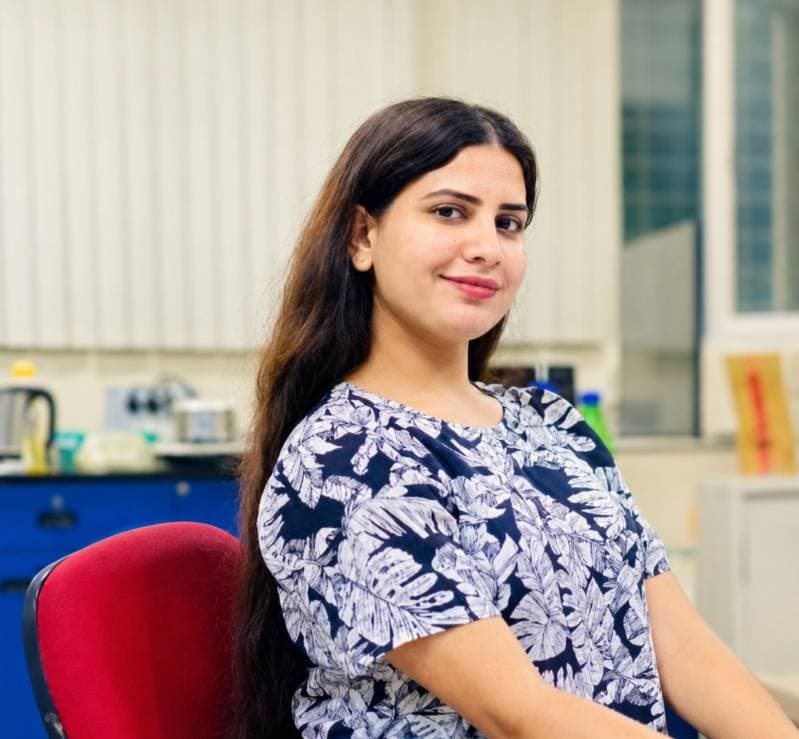
Commonwealth Split-site PhD Fellow, University of Surrey, England, United Kingdom, and Prime Minister’s Research Fellow (PMRF), IIT Roorkee
Currently undertaking Commonwealth Fellowship research at the University of Surrey, United Kingdom Indian Institute of Technology (IIT) Roorkee, India
To explore the development of flexible and sustainable supercapacitor electrodes using advanced materials and sputtering technologies, while examining their electrochemical performance, environmental impacts, and scalability.